Traditional Chinese Medicine: An Ancient Practice for Modern Times
Traditional Chinese Medicine (TCM): what it is, its roots and history, its holistic approach, and how it fits as a complement to modern care. Plateau-Mont-Royal clinic.
Clinically reviewed by Justin Lapointe, member of the OAQ · August 8, 2026
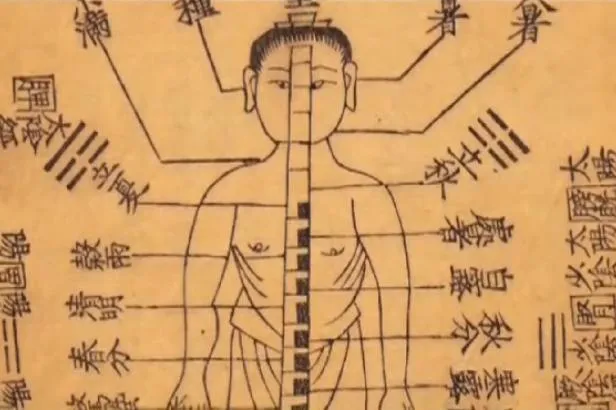
July 1971. An American journalist for the New York Times, James Reston, wakes up in a Beijing hospital: his appendix has just been removed. The surgery was done under conventional anesthesia, whatever the legend says. But over the following nights, gripped by post-operative pain, he lets a doctor place a few needles in his elbow and below his knees, and burn an herb near his abdomen. The discomfort eases within the hour. Back at his typewriter, Reston writes it up. The piece runs on the front page of July 26, 1971 — and, all at once, the West begins to talk about acupuncture.
It’s the story of a journey: how a medicine two thousand years old, born on the other side of the world, ended up in a clinic in the Plateau-Mont-Royal. And it’s also the story of a question: what does it take for a therapy to earn its legitimacy?
Book an appointment at the clinic (opens in a new tab)
What is Traditional Chinese Medicine?
TCM is a complete system that brings together several practices: acupuncture, herbal medicine, tuina (therapeutic massage), dietetics, and mind-body exercises such as tai chi and qigong. At its heart is the concept of Qi (pronounced “chee”), the “energy” the tradition says circulates and balances: a conceptual marker, as we’ll see, rather than a measurable quantity.
Where to start
This page is the starting point for the subject on this site. What follows traces how this medicine reached us; the four doors below lead to the articles that take each strand further.
They are ordered by the question readers ask most often, not by the order in which the tradition teaches itself. Readers almost always arrive holding a term they picked up somewhere (“the Liver”, “Qi”, “the five elements”) and want to know what it covers. So that’s where we begin.
The core ideas
What the tradition calls the Liver, the Kidney or Qi, and what those words actually point to. These are the terms readers meet first, and the ones most often misread.
- August 22, 2026
Dampness, Mucus and Phlegm: The Pathogen That Sticks
4 min read - August 1, 2026
The Immune System in Chinese Medicine: A Defence in Layers
5 min read - June 27, 2026
Seasons and Cycles in Traditional Chinese Medicine
5 min read - June 27, 2026
Kidney Energy in Traditional Chinese Medicine
10 min read - July 20, 2024
Understanding Acupuncture: Balancing Yin and Yang
7 min read - February 17, 2024
Liver Syndromes in Traditional Chinese Medicine
4 min read
5 more articles on this theme in the blog.
Does it work?
A fair question, and it deserves better than yes or no. These pieces look at what the studies establish, what they leave open, and why the answer depends on the condition.
- June 30, 2026
The Black Box Is Everywhere
7 min read - June 27, 2026
Effectiveness, the Plaque and the Person: What Acupuncture Can Teach Us About Medicine in 2026
10 min read - June 27, 2026
Acupuncture, a Way Out of Crisis? Paradigms in Health Care
5 min read - April 16, 2024
Electroacupuncture: Mechanisms, Uses and Precautions
3 min read
2 more articles on this theme in the blog.
Where it comes from
The founding texts, and the path that runs from ancient China to a Quebec practice governed by a professional order.
- August 29, 2026
Thinking About Epidemics Without a Microscope: The Wen Bing School
5 min read - August 8, 2026
Wind in Chinese Medicine, Chief of the Hundred Diseases
5 min read - July 6, 2026
The Clinician's Hand: Sensationism, from Chinese Medicine to the Vienna Circle
11 min read - June 27, 2026
Meridian Theory in Traditional Chinese Medicine
4 min read
6 more articles on this theme in the blog.
The five spirits, in order
Five articles meant to be read in sequence: to each organ, the tradition attaches a dimension of mental life. It’s the only ordered series on the site, and the articles refer to one another in this order.
- July 14, 2026
The Flame and Its Oil: Shen, the Spirit of the Heart
15 min read - July 14, 2026
The Two Ways of Overthinking: Yi, the Spirit of the Spleen
13 min read - July 14, 2026
Po: The Corporeal Soul of the Lung in Chinese Medicine
12 min read - July 14, 2026
Will Is Not Motivation: Zhi, the Spirit of the Kidney
15 min read - July 14, 2026
Imagination Is an Organ Function: Hun, the Spirit of the Liver
14 min read
Two thousand years of transmission
TCM’s roots reach deep into ancient China, making it one of the oldest and most developed systems of traditional medicine. They are traced to texts such as the Huangdi Neijing (the Yellow Emperor’s Inner Classic), more than two thousand years old, which lays down the groundwork of Yin-Yang and the five elements, the “Five Phases” (wǔxíng 五行). Across the dynasties the edifice grew: the Sui and Tang (581–907 CE) founded state medical schools and standardized the texts; under the Song (960–1279), pediatrics and gynecology took shape as specialties. In time the practice spread beyond China, marking Japan, Korea, and Southeast Asia.
How the needle travelled West
The Reston episode was only a spark; it still needed fuel. When Nixon visited China in February 1972, American physicians in the delegation watched widely reported demonstrations of acupuncture analgesia. Curiosity became a wave: clinics, schools, and the first research efforts multiplied through the 1970s.
Then came the slow work of institutions. As early as 1979 the World Health Organization took an interest in acupuncture; in 2003 it published a review of the available clinical trials; and in 2019, in a debated move, its International Classification of Diseases (ICD-11) included, for the first time, a chapter of “traditional medicine” featuring East Asian diagnostic categories. Recognition is not demonstration, and each of these steps was contested. That’s the whole point of the story: in medicine, legitimacy is not declared, it is negotiated, case by case, institution by institution. (On the Québec chapter of that story, see our history of acupuncture in Québec.)
Medical pluralism: two medicines under one roof
Contemporary health care is increasingly plural: alongside biomedicine, complementary approaches find a place, provided they know their own. Acupuncture fits in as an adjunct: it is used, for example, alongside cancer treatment to ease certain side effects such as nausea or fatigue, in coordination with ongoing medical care. Not “instead of,” but “alongside.” We explore that dialogue between frameworks in our essay on paradigms in health care.
The “holistic” approach
What the tradition claims is a view of the whole: rather than the symptom alone, the practitioner considers the person (lifestyle, emotions, environment) and looks, within that framework, for the “root” of an imbalance. A way of thinking about care, not to be mistaken for a physiological explanation.
What the research says
Let’s be precise. Acupuncture is among the most-studied complementary therapies: for some indications (pain, nausea) the data are encouraging; for others they remain inconclusive. Chinese herbal medicine is less well documented and raises its own questions of quality and safety. None of this amounts to a promise: clinical value is judged indication by indication — see our overview of the evidence.
In summary
Two thousand years old, having travelled from China to win international recognition little by little, Traditional Chinese Medicine today holds the place of a complementary therapy. A traditional, symbolic framework, distinct from biomedical science, that belongs alongside conventional care rather than in its place. Its relevance rests not on a promise, but on the rigour with which it is practised and assessed.
In plain terms. In Chinese medicine, the vivid terms (Qi, Yin/Yang, Fire, Wind, Dampness…) are conceptual and cultural markers: tools for thinking, not descriptions of physiology. We present them as a lens for reading care, distinct from the biomedical explanation, and with no promise of results.
In the Plateau-Mont-Royal, open 7 days a week. Acupuncturists · OAQ members, physiotherapist · OPPQ member. Insurance receipts issued on site.Our content follows a published editorial methodology.