When your back sets the limits
Low back pain that keeps coming back, pain running down the leg, stiffness that settles in: the back is one of the first reasons people consult. Acupuncture can contribute to relieving it, alongside medical care or physiotherapy, never in place of them.

Does this sound like you?
Back pain takes very different forms from one person to the next. Here is what we hear most often in clinic:
Lower-back pain, stiffness on getting up or after holding one position
Pain radiating from the buttock into the thigh, sometimes to the calf or the foot
Numbness or pins and needles in one leg
Pain that settles in over days spent sitting: office, remote work, commuting
Neck and shoulder tension linked to prolonged positions or repetitive movements
A back that limits sport, sleep or everyday movements
If several of these ring true, acupuncture may be one of the avenues worth exploring, with your physician or your physiotherapist as needed.
Low back pain or sciatica: a useful distinction
Low back pain: the lower back protesting
Pain located in the lower back: muscles, joints and ligaments called on by exertion, posture or a sedentary routine. This is the most common picture: often mechanical, it comes in episodes.
Sciatica: the pain that travels down
Pain following the path of the sciatic nerve: buttock, back of the thigh, sometimes calf and foot, with or without numbness. Diagnosing the cause belongs to the physician; acupuncture takes its place as support.
What acupuncture may bring
Four lines of work: what is studied, what is observed, and what a session can support.
Pain
Acupuncture is studied for the management of chronic pain. An individual patient data meta-analysis of 39 trials and 20,827 patients (Vickers et al., The Journal of Pain, 2018, PMID 29198932) reports a real but modest effect: about 0.2 standard deviations against sham acupuncture, about 0.5 against no treatment, with persistence at one year that decays by roughly 15%. Vickers AJ et al. (2018), The Journal of Pain · PMID 29198932 (opens in a new tab)
Deep tension
Electrostimulation allows intensity and frequency to be varied according to the area being worked: one more adjustment in the clinician’s hands. Research hasn’t settled what each setting produces exactly.
Posture and repetitive movements
Back, neck and shoulder pain linked to prolonged positions or repetitive movements: a common picture in clinic, approached as a whole. Jahn et al., 2023 · PubMed (opens in a new tab)
The wider ground
Short sleep, stress that tightens, incomplete recovery: pain rarely sustains itself alone. The session takes the whole picture into account, not only the painful area. Runge et al., 2024 · PubMed (opens in a new tab)
The number of sessions and how things evolve vary with the condition and the person, with no promise of results.
What traditional Chinese medicine says
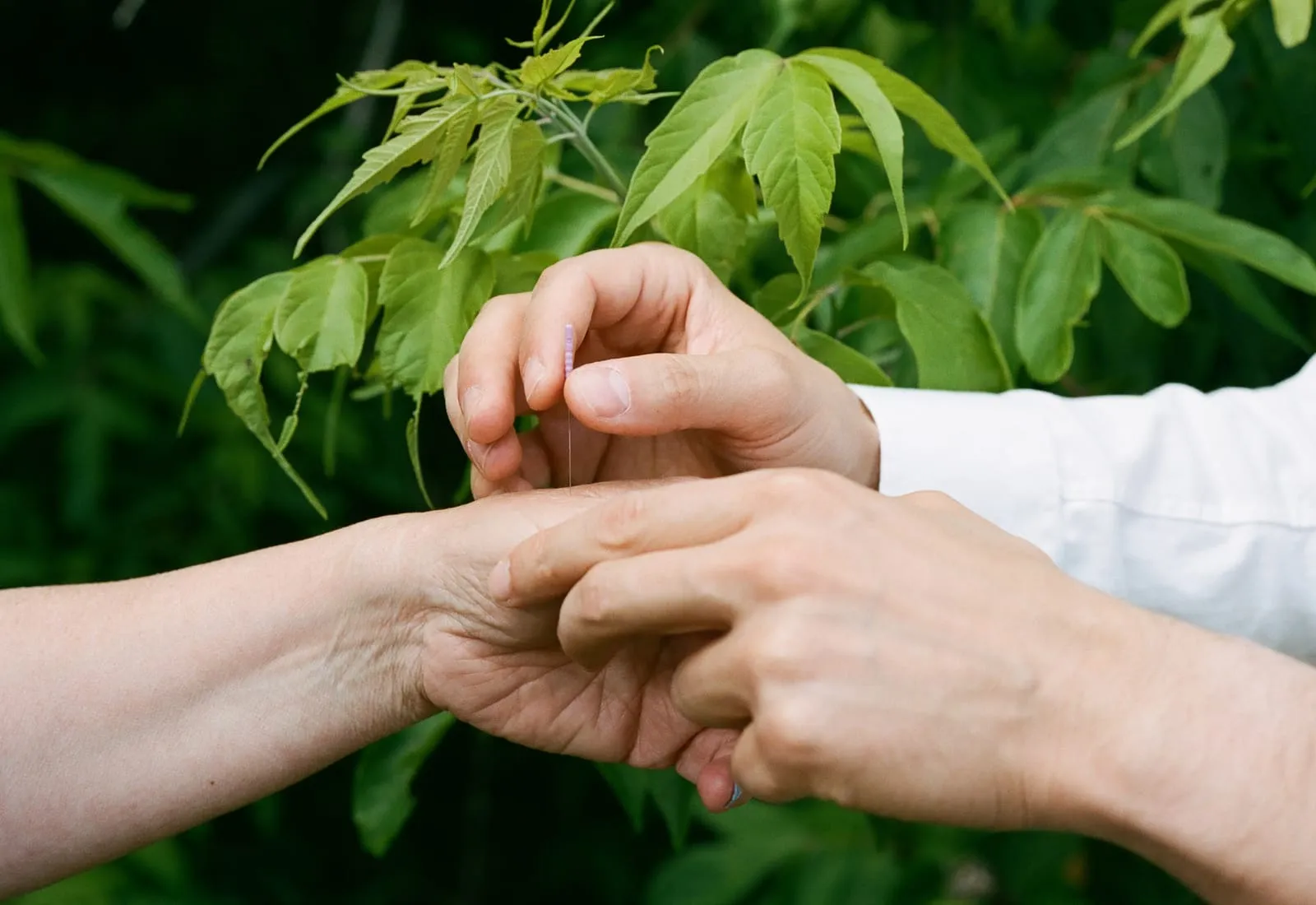
In Chinese medicine, the lower back is closely associated with the Kidney, of which it is traditionally described as the “dwelling”: a back that tires quickly is read there as one sign to be placed back within the whole picture. Radiating pain is read along the paths of the meridians that run down the back and the leg.
The acupuncturist’s role is to identify, through listening, the pulse and the tongue, where circulation is most disturbed in you, then to choose the points that help it settle. This reading remains a traditional framework, not a clinical demonstration; it is added to the physiological approach, not a substitute for it.
To go further into that view:
Acupuncture and physiotherapy, together
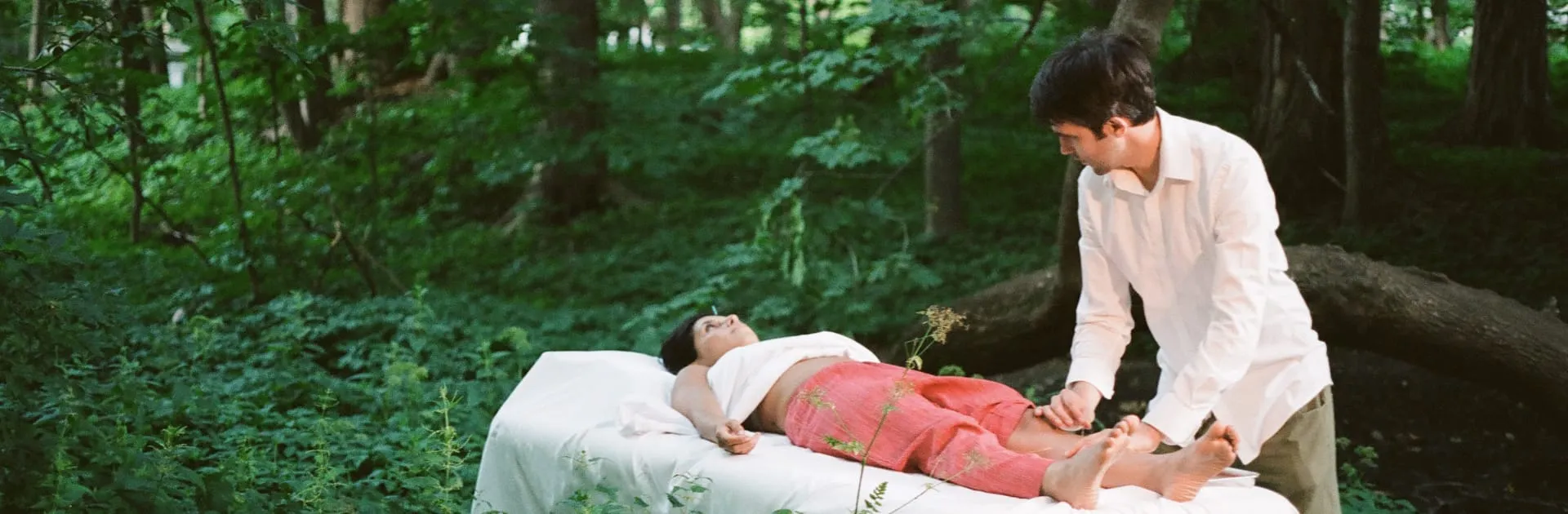
Backs often respond better to a combined approach: acupuncture for pain and tension, physiotherapy for strength, motor control and the return to movement. Both are practised at the clinic: Josh Whelan, physiotherapist, works hand in hand with the acupuncturists.
Dry needling and acupuncture: the same needle, two traditions
Many people come in with the words dry needling. The technique targets atrigger point: a palpable knot in a muscle that wakes up local or radiating pain when you press on it. For a back that pulls, or pain running down the leg, that’s often exactly what you’re looking for.
Acupuncture has had its own points for pain for far longer: the Ashi points (阿是穴), named after what the patient says when the practitioner finds the right spot. They have no fixed location and are found by pressure, exactly like a trigger point. The needling itself looks much the same; two traditions named the same finding.
At the clinic, dry needling is practised within the practice of acupuncture byJustin Lapointe, acupuncturist.
Dry needling vs acupuncture, in detailWhen to see a physician first
Acupuncture is added to medical care; it does not replace it. If any of the following comes with your pain, a prompt medical consultation comes first:
- Loss of strength in a leg or a foot (a foot that “drags”)
- Sudden bladder or bowel problems, numbness around the saddle area
- Back pain with fever, or following a significant injury
- Night pain that worsens with no mechanical trigger, unexplained weight loss
In Québec, Info-Santé 811 can point you in the right direction 24 hours a day. Once the picture is clear, acupuncture fits well alongside your care; it is not opposed to it.
What a first appointment looks like
The first session runs 75 to 90 minutes depending on the practitioner: a full assessment covering the history of the pain, movement, sleep and context, then a treatment suited to it. Follow-ups are shorter, 60 to 70 minutes, and allow the pace to be adjusted as things evolve.
First acupuncture visit $110 (75 to 90 minutes)Follow-up session · adult $95 (60 to 70 minutes)Receipt issued on site. All rates
Who will see you
Both are members of the Ordre des acupuncteurs du Québec and practise at the same clinic. You choose when you book, and you can switch from one visit to the next.

Justin Lapointe
Acupuncturist · ownerMember of the OAQSees patients in the afternoon and early evening.

Jessica Chan
AcupuncturistMember of the OAQMostly mornings, often within the week.
Your questions, plainly answered
How many sessions for back pain or sciatica?
The number of sessions and how things evolve vary with the condition and the person, with no promise of results. The pace is set with your acupuncturist at the first appointment, and adjusted according to your response to treatment.
Can I come in during an acute bout of sciatica?
Yes, alongside your medical care. If your pain comes with any of the signs listed above (loss of strength, sudden bladder problems), see a physician first, without delay.
Acupuncture or physiotherapy: which should I choose?
The two approaches complement each other: acupuncture works on pain and tension, physiotherapy on strength, motor control and movement. Many patients combine them. If you’re unsure, call us and we’ll point you to what fits your situation.
Does it hurt?
The needles are far finer than an injection needle. The sensation is most often described as slight pressure, or as nothing at all.
Do you do dry needling for back pain?
Yes. Dry needling targets a trigger point, the muscular knot that wakes up local or radiating pain when pressed. Acupuncture has long worked with points found the same way, the Ashi points. At the clinic, dry needling is practised within the practice of acupuncture by Justin Lapointe, acupuncturist.
Are sessions covered by insurance?
Acupuncture care given by a member of the Ordre des acupuncteurs du Québec is often deductible as a medical expense. A receipt is issued at every session; check your coverage with your insurer.
The full rate list, physiotherapy included, is on the Rates page.
What this page rests on
- Vickers et al. (2018), The Journal of Pain (opens in a new tab): individual patient data meta-analysis, chronic pain (including musculoskeletal pain).
- Jahn et al. (2023) (opens in a new tab): occupational mechanical exposures and low-back pain (moderate certainty; prolonged sitting shows only a weak signal, lumbar only). Epidemiology, not evidence of acupuncture’s efficacy.
- Gao et al. (2023) (opens in a new tab): neck and shoulder pain and screen time (cross-sectional studies in university students, an association rather than a cause).
- Runge et al. (2024) (opens in a new tab): 16 prospective cohorts, 116,746 participants; sleep and pain sustain each other, and the long-term direction remains uncertain.
Every pain has its own history: the best way to find out whether acupuncture can help you starts with a conversation.
Book an appointment (opens in a new tab)Also available: physiotherapy with Josh Whelan; book in physiotherapy (opens in a new tab).