Fire cupping in Montreal
A classical technique of Chinese medicine: glass cups placed on the skin for a few minutes to relax the muscles, usually alongside an acupuncture session. It leaves round, painless marks that fade within a few days.
Open 7 days a week · Monday and Friday from 9 a.m.
What fire cupping is
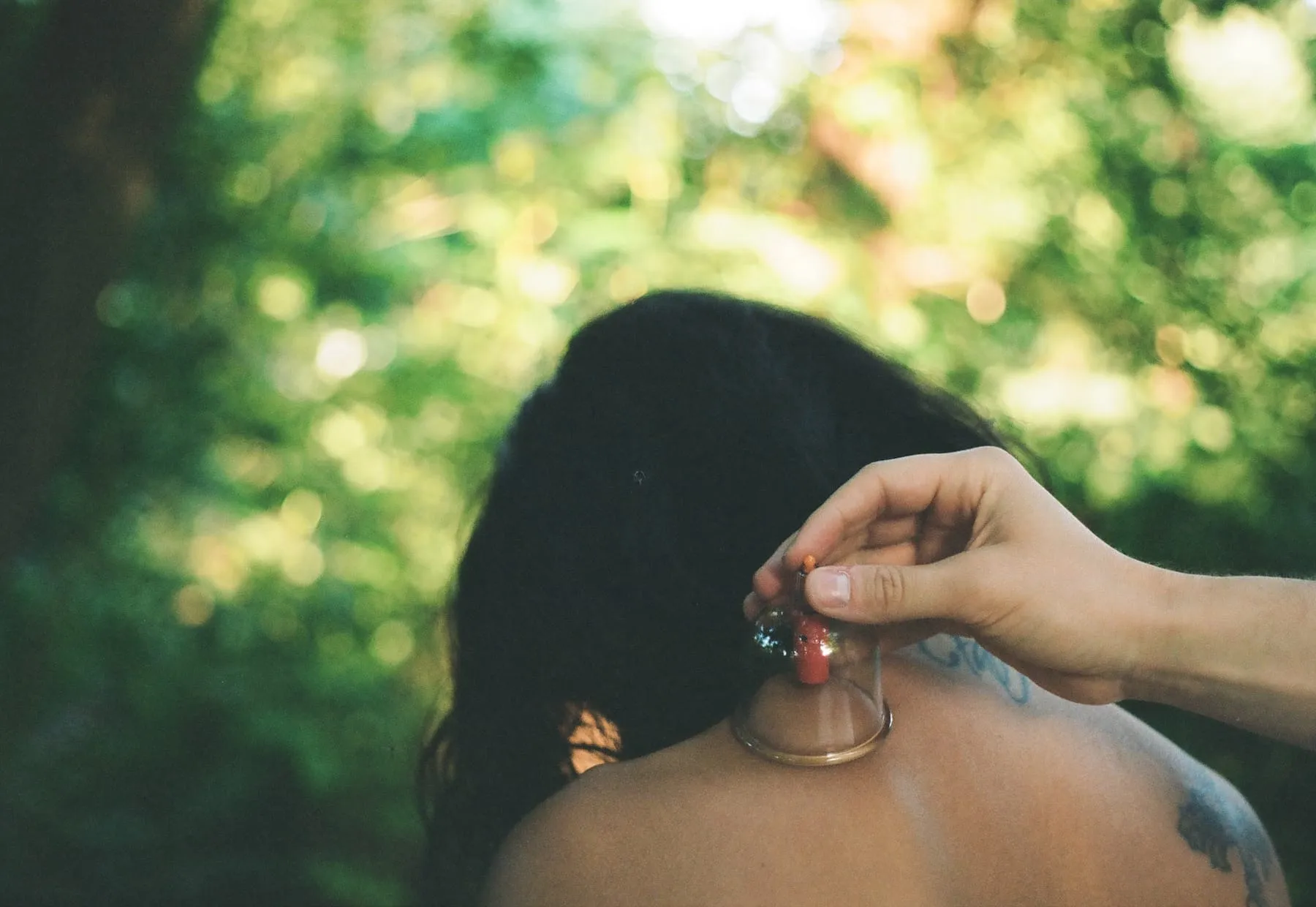
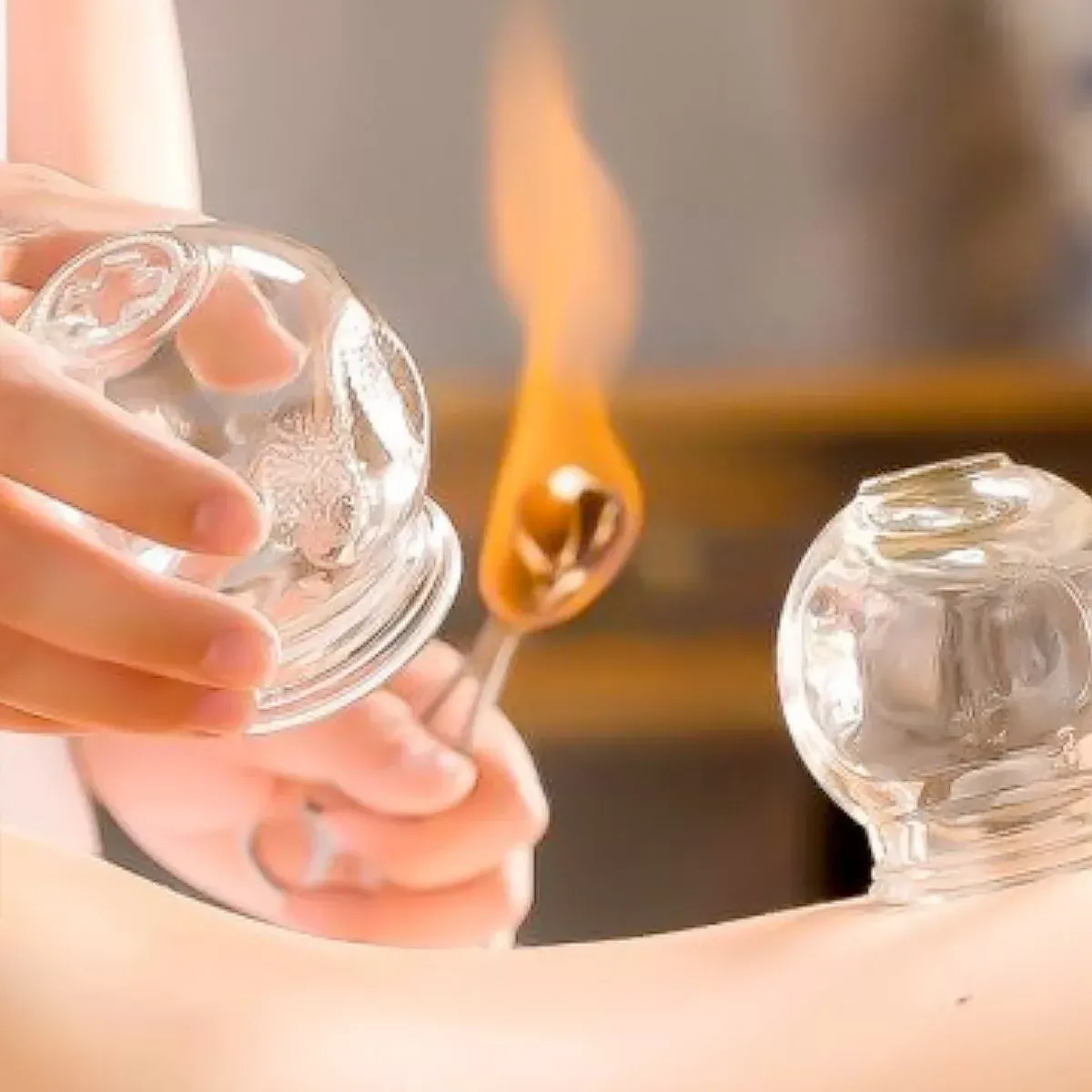
The cups are made of glass. A flame is briefly introduced into the cup to create suction; the cup is then taken away from the fire and applied quickly to the skin, where it stays in place for a few minutes at a time. The flame serves only to create the suction and never comes into contact with the skin. The technique aims to relax the muscles. It belongs to the classical repertoire of Chinese medicine, alongside the acupuncture it has accompanied for centuries.
Moving what stagnates
In Chinese medicine, cups set with a flame (huǒ guàn 火罐, fire cupping, from the generalbá guàn 拔罐, literally “to draw out with the pot”) serve to move Qi and Blood and to release stagnation. A painful, tense area that moves poorly is read as circulation locally held back; the suction, by lifting the skin and the tissues, sets what had become fixed back in motion. It is a classical principle of the discipline: what circulates freely does not hurt, what stagnates becomes painful.
Cups are most often placed along the meridians (notably on either side of the spine, a major pathway of the back) or directly on acupuncture points. Where the needle works one precise point, the cup covers an area: the two tools complement each other naturally within a single session. The tradition also used them to “release the surface” at the first signs of a chill, a use still described in the classical texts.
What this vocabulary calls “stagnation” can also be said in contemporary language: local tenderness, muscular tension, reduced mobility of the tissues. Two languages for the same observation.
Why people turn to it
Cupping is most often used in the clinic for muscular pain or stiffness. It is also among the approaches considered for certain digestive discomforts or allergies, generally alongside acupuncture, with which it shares the same reading of the body through meridians and Organs.
Fire cupping is added to your medical care; it does not replace it. It leaves round, painless marks that fade within a few days: that’s expected, and it’s not a bruise.
Also on the blog: sports acupuncture and recovery, how acupuncture works, meridian theory and balancing Yin and Yang. In the clinic: back pain and sciatica.
What to expect
Applying the cups can leave temporary red marks on the skin. These marks are painless and usually fade within a few days. The tradition read them as a picture of the local circulation; in practice, how pronounced they are depends mainly on the strength and the duration of the suction. If you’d rather avoid these marks, simply mention it during your treatment.
Precautions
Some precautions apply:
- Broken or irritated skin in the area concerned
- Pregnancy, depending on the area treated
- Blood-clotting disorders
Always mention your medication and medical conditions during the initial assessment.
The marks, plainly
This is the question that comes up most often, and the one people hesitate most to ask. Here are the straight answers.
Does it leave marks?
Yes, round painless marks that usually fade within a few days. They’re not bruises: how dark they look depends mainly on the strength and duration of the suction.
Can I avoid the marks if I have an event coming up?
Just say so at the start of the session. The strength and the duration of the suction can be adjusted, and the treatment is adapted accordingly. That’s the only thing to plan for before booking.
Does the flame touch the skin?
Never. The flame is passed briefly inside the glass cup to create the suction, then the cup is taken away from the fire before being applied to the skin. The cup stays on for a few minutes at a time.
Is it combined with acupuncture?
Yes, and that’s the most common case: cupping is usually added to an acupuncture session, and the two share the same reading of the body through meridians and Organs.
Who practises fire cupping at the clinic?
Jessica Chan, acupuncturist and member of the Ordre des acupuncteurs du Québec. At the clinic, she is the only one who offers this technique, so bookings are made with her.
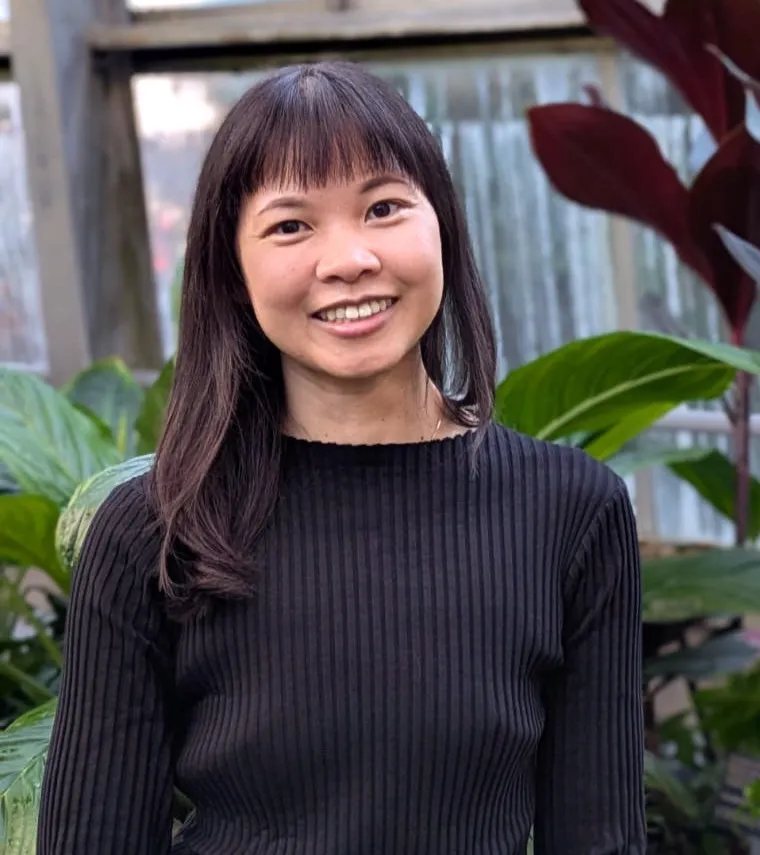
Offered by Jessica Chan, acupuncturist, generally alongside an acupuncture session.
Book with Jessica (opens in a new tab)- First visit · 75 minutes
- $160
- Follow-up session · 60 minutes
- $145
Fire cupping is booked together with an acupuncture session: one visit, and the amount above covers all of it.
Mention it when you book your appointment with Jessica, or during your initial assessment.
Open 7 days a week · Monday and Friday from 9 a.m.