This article is part of our guide to Chinese medicine.
The Nei Jing, Founding Text of Chinese Medicine
The Huangdi Neijing has no single author: a Han-era anthology where the vocabulary of Qi, Yin and Yang, and the meridians took its lasting shape.
Clinically reviewed by Justin Lapointe, member of the OAQ · August 8, 2026
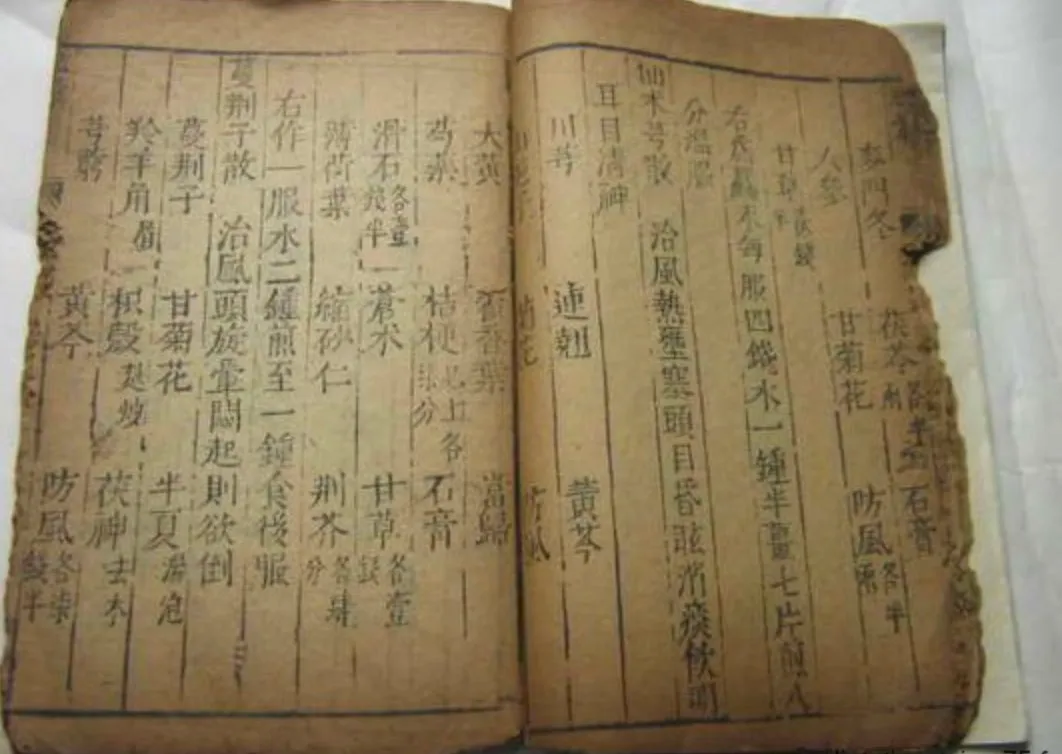
Most great medical treatises begin with a definition. The oldest of Chinese medicine begins with a question, and an almost wistful one: why did the people of old live a hundred years without faltering, while ours wear out halfway? Have the times changed, the Yellow Emperor asks, or have people lost something? The Huangdi Neijing, the “Inner Classic of the Yellow Emperor,” opens on that. Two thousand years later, the question hasn’t aged.
Book an appointment at the clinic (opens in a new tab)
A dialogue, not a dogma
The Neijing doesn’t lay down the law: it holds a conversation. It stages the Yellow Emperor, Huang Di, questioning his minister and physician Qi Bo. One asks, the other unfolds. The form already says something about this medicine, where knowledge is born of exchange and doubt rather than revelation. (At the same period, on the other side of the world, Plato had Socrates speak in dialogue: civilisations, it seems, like to think in two voices.)
And the dialogue isn’t a stage set. In chapter 47 of the Lingshu, the emperor grows impatient with an answer that won’t end and cuts his interlocutor off: that wasn’t the question. In chapter 79, it is the scholar Shao Shi who wonders aloud that an emperor could be ignorant of such a thing. A revealed text does not allow itself scenes like these. This one lets you see that authority may be questioned.
A book without an author
We say “the Neijing” the way we say “Hippocrates,” and it’s the same misunderstanding in both cases. The philologist Paul Unschuld, who produced the reference English translation, puts it bluntly: we know nothing of the authors of the texts gathered in the Suwen and the Lingshu, any more than we do of those of the Hippocratic Corpus. As early as the fourteenth century, the scholar Lü Fu had seen that the Suwen was not the work of a single hand.
What happened looks less like writing than like an editor’s work. From the Han onward, compilers drew on a vast reservoir of separate texts and assembled corpora. The Suwen kept that anthology character better than any other collection of its time: the seams are still visible. Chapters alternate between dialogue and exposition, the interlocutors change, and two neighbouring treatises explain the same fevers in two incompatible ways. Nobody tried to smooth it over. And the text kept moving: under the Tang, the physician Wang Bing reorganized and annotated it; in the eleventh century, an imperial editorial bureau annotated it again and published the printed version that has been authoritative ever since.
One last landmark, so as not to get the story wrong: the Neijing is not the beginning of acupuncture; it is its putting-in-order. The oldest known manuscripts, those of Mawangdui, describe pathways without points; the system as we know it takes shape in the Han compilations. We come back to this in our reflection on paradigms in health.
Two books, two temperaments
The work divides in two, eighty-one chapters on each side, and the two halves are nothing alike.
The Suwen, the “plain questions,” holds the cosmological side: heaven and the seasons, Yin and Yang, the ages of life, what wears down and what preserves. It is the book of principles.
The Lingshu is the book of the hands. Its first chapter is titled “The nine needles and the twelve origin openings,” and the tone is set from the start: instruments, depths, pathways, indications. The bibliography of Liu Xin, at the beginning of the first century, in fact mentions a Zhenjing, a “Classic of Needles” in nine chapters, and no one now knows what it shares with today’s Lingshu. The received title, “spiritual pivot,” is misleading: no one has been able to establish who gave it, and the content is of a thoroughly technical dryness. No magic, no invisible powers. Regularities of nature, and needles.
Qi, Yin and Yang, meridians: three words we don’t translate
The Neijing is where this vocabulary settles. It is worth looking at what these words say, and what they don’t.
Yin and Yang are not a mystique: they are sorting tools. The book’s very first answer shows it well. When Qi Bo is asked the secret of the ancients, he speaks neither of plants nor of needles: they ruled their conduct on Yin and Yang, ate and drank with measure, rose and retired with regularity, and did not exhaust themselves in useless labours. Yin and Yang serve here to think alternation: day and night, activity and rest, what rises and what descends.
Qi is the word worst served by translation. Unschuld gives up rendering it in English and leaves it in pinyin, along with Yin and Yang, for a reason he stands by: the Chinese word carries too many senses at once to fit into any single Western word. When a philologist of that rigour leaves three words untranslated, it isn’t laziness; it’s a warning. “Energy” is a convenience of language, not an equivalence.
The meridians, finally, are called jīng 经, and jīng first named the warp of a loom, the threads stretched lengthwise. From there the word slid toward the idea of what runs through from end to end and carries the structure. The texts distinguish the jīngmài 经脉, the great vessels that run the body’s length, from the luòmài 络脉, the network vessels that mesh it crosswise. The original image is not an electric current but a weave: meridian theory descends from that metaphor.
A medicine that begins with the art of living
What strikes you at the opening is the order of priorities. Before anatomy, before diseases, the Suwen speaks of lifestyle and time: living to the rhythm of the seasons, rising and resting with the light, not exhausting one’s essence, tempering one’s desires. Health here is less a state than an accord, that of the human being with the cycles around them.
From this comes the book’s most modern idea. Suwen 2 puts it in a sentence the tradition never let go of: the sages did not treat what was already ill; they treated what was not yet ill. And the text drives the point home with two images, one of which has stayed proverbial: to administer a remedy when the illness is fully declared is to dig a well when you are already thirsty, to forge your weapons when the battle is joined. The chapter then asks its own question, and it needs no commentary: is that not a little late?
What we keep of it
It would be a mistake to read the Neijing as a book of recipes. It isn’t one, and today’s medicine doesn’t refer to it to prove anything. We read it instead as a founding text, for the form of attention it proposes: attention to the seasons and to sleep, the idea that the body is a small world joined to the great one, the preference for prevention over repair, the conviction that you treat a person and not a symptom.
What comes down from it to the treatment table is a language. When an acupuncturist speaks of Liver syndromes, they use a map born of these texts to connect signs and decide where to place the needle. None of that is clinical proof: what the research examines is measured with other tools, and acupuncture adds to usual care without replacing it. But as a way of asking questions, the old book still holds. The concerns people consult for are said in plain English; the frame that organizes them comes from here.
In plain terms
In Chinese medicine, the image-laden terms (Qi, Yin and Yang, Fire, Wind, Dampness) are conceptual and cultural landmarks, tools for thinking rather than descriptions of physiology. We present them as one way of reading care, distinct from biomedical explanation, and without any promise of results.
Read next: traditional Chinese medicine today, and the philosophical foundations of traditional Chinese medicine.
Curious to see what this frame looks like in a session? Let’s have a look together. Book an appointment, in the Plateau-Mont-Royal.
In the Plateau-Mont-Royal, open 7 days a week. Acupuncturists · OAQ members, physiotherapist · OPPQ member. Insurance receipts issued on site.Our content follows a published editorial methodology.