This article is part of our guide to Chinese medicine.
Emotions and the Body in Traditional Chinese Medicine
The seven emotions of Chinese medicine: which Organ the tradition ties anger, fear, sadness and rumination to, and what it watches for in each.
Clinically reviewed by Justin Lapointe, member of the OAQ · August 8, 2026
We speak of a “gut feeling” and a “heavy heart” without thinking twice. Chinese medicine took those metaphors at face value: it housed each emotion in an organ, and to each organ it entrusted not only a feeling but a faculty of the soul. The result is a thoroughly embodied psychology, in which no emotion is ever “purely” mental.
Here is that framework: not a clinical demonstration, but an inheritance still worth knowing.
Book an appointment at the clinic (opens in a new tab)
The five Organs and their emotions
The tradition sorts the affects into seven emotions (七情): joy, anger, worry, thought, sadness, fear and fright. It then distributes them across the five Organs (Wu Zang), which are at once their seat and their target.
- The Heart: joy.
- The Liver: anger.
- The Spleen: thought and rumination (思).
- The Lung: sadness.
- The Kidney: fear.
Seven on one side, five on the other: fright files with fear, on the side of the Kidney and the Heart; worry files with sadness, on the side of the Lung.
One point of vocabulary is worth flagging: some contemporary authors also place worrying things over on the Spleen’s side, whereas the classical scheme assigns worry (憂) to the Lung.
The psycho-visceral entities: the five spirits
The tradition goes further still than this table of emotions. To each of the five Organs it entrusts not only an emotion but a faculty of the soul: a “spirit.” These are the five spirits (Wu Shen).
The Heart houses the Shen, clear consciousness and sleep. The Liver lodges the Hun, the “ethereal soul”: imagination, dreams, the projects that carry us toward the future. The Lung keeps the Po, the “corporeal soul”: instinct and sensation, what anchors us in the body. The Spleen watches over the Yi, thought and intention, the capacity to reflect and concentrate. The Kidney, finally, holds the Zhi, will and determination, the quiet force that holds over time.
In this frame you can see why rumination that drags on “exhausts” the Spleen, or why lasting fear “wears down” the will of the Kidney: the Organ and the psychic faculty are one. It’s an embodied psychology, with no “pure” emotion that leaves the body untouched, and no body indifferent to mood.
The main emotions in TCM
Emotions are considered natural responses to the world; what the tradition watches is their excess or their duration. The Suwen (chapter 39) gives the overall logic: each emotion stamps its own movement on the Qi. Anger makes it rise, joy loosens it, sadness dissolves it, fear makes it descend, fright throws it into disorder, and circling thought ties it in knots. That movement is what the tradition reads behind the signs it associates with each Organ:
- Excessive joy (Heart): the Qi loosens; the framework reads agitation there, a mind that scatters.
- Anger (Liver): the Qi rises; the tradition ties it to a head that tightens, tension in the flanks, a disrupted cycle.
- Rumination (Spleen): circling thought knots the Qi; the framework reads a digestion that drags, an appetite that slips away.
- Sadness (Lung): the Qi dissolves; short breath, a voice that fades, drive that goes missing.
- Fear (Kidney): the Qi descends; the framework reads urine that escapes, a lower back that gives way.
On that last point, see the Zhi, the will housed in the Kidney: it is this faculty the tradition sees eroding under a fear that settles in.
When the emotions tip out of balance
In this model, the causes of illness fall into two families: external factors, the six climates (Wind, Cold, Summer Heat, Dampness, Dryness, Fire), and internal factors, which are precisely the emotions themselves. The emotion, then, is not pathogenic by nature. The tradition holds it to be an ordinary response to the world, and only looks at it closely when it strikes too hard, settles in too long, or finds nowhere to come untied.
On this ground, see also our page on stress through the lens of Chinese medicine.
Balancing the emotions
The tradition does not try to silence emotion. It looks at the movement the emotion stamps on the Qi and works the other way: what has risen is brought down; what has knotted is untied; what has scattered is gathered. It’s the Suwen’s list taken up from the other end.
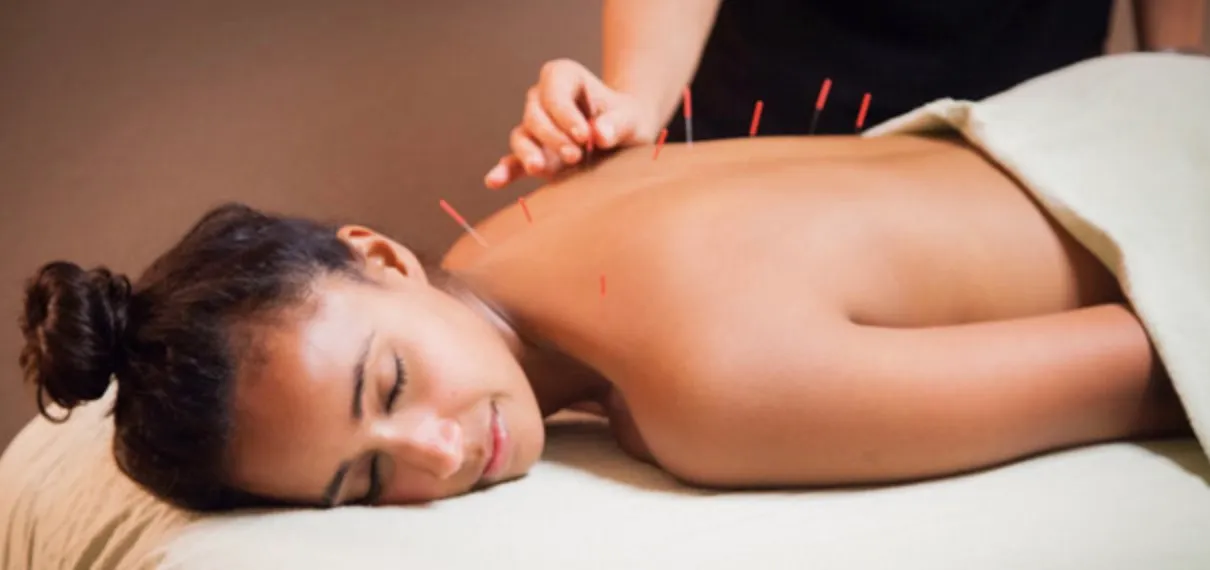
Acupuncture is the clinical avenue. Points are chosen on the Organ and the movement read at the Chinese-medicine assessment, not on the word the person uses: two people who say “I’m anxious” won’t necessarily receive the same needles. That’s one reason the first meeting is long.
The old corpus also preserves a more disconcerting method: treating one emotion with another. The Suwen (chapter 5, “the great treatise on the correspondences of Yin and Yang”) gives the cycle. Sadness prevails over anger, fear over joy, anger over circling thought, joy over worry, reflection over fear. Zhang Cong-zheng (1156–1228) made a practice of it, going as far as staging something to make a patient laugh who had not laughed in months. Nobody works that way today, and the procedure may raise an eyebrow. The intuition, though, remains interesting: an emotion is often easier to move than to reason with.
Around the needle, the system has other avenues. Qi Gong and Tai Chi, disciplines of the breath, work on regularity rather than performance. Dietetics is thought out along the same correspondences of Organs and flavours. Chinese herbal medicine, finally, falls outside the practice of acupuncture in Quebec and is not offered at the clinic, but its existence says a great deal about the scope of the system.
None of these avenues replaces medical or psychological care where that is indicated, and a discomfort that settles in should first be discussed with a doctor.
Red flag. Distress that lasts, dark thoughts or thoughts of suicide are not to be read through a table of correspondences: they call for help without delay. In Quebec, Info-Social answers day and night at 811 (option 2); in an emergency, 911.
What the emotions do in the body
In this framework, body and mood are not thought about separately. The tradition thus describes a rise of Liver Yang under the effect of anger, and ties the heavy head or dizziness to it.
Sadness “dissolves” the Qi; the word is the Suwen’s (chapter 39). It’s the Lung that pays: short breath, a voice that fades, shoulders that drop.
Understanding this framework gives you one more vocabulary for noticing what’s happening in you. That’s already a lot.
On what contemporary research observes, see the review of the literature on acupuncture’s physiological processes. The two languages are not equivalent, but each can shed a different light on the same clinical experience.
In plain terms
In Chinese medicine, the image-laden terms (Qi, Yin/Yang, Fire, Wind, Dampness…) are conceptual and cultural landmarks, tools for thinking rather than descriptions of physiology. We present them as one way of reading care, distinct from biomedical explanation, and without any promise of results.
Read next: Five Element theory in traditional Chinese medicine and metaphors in traditional Chinese medicine. In the clinic: acupuncture for stress and anxiety.
Anger that rises, rumination that circles, fear that wears you down? Let’s have a look together. Book an appointment, in the Plateau-Mont-Royal, 7 days a week.
In the Plateau-Mont-Royal, open 7 days a week. Acupuncturists · OAQ members, physiotherapist · OPPQ member. Insurance receipts issued on site.Our content follows a published editorial methodology.