This article is part of our guide to Chinese medicine.
Metaphors in Traditional Chinese Medicine: An Evocative Language
Fire, Wind, Cold and Dampness: why Chinese medicine uses these metaphors and how to read them without misunderstanding.
Clinically reviewed by Justin Lapointe, member of the OAQ · August 8, 2026
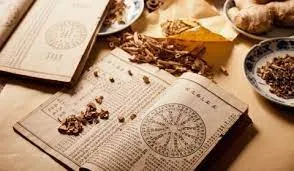
To learn Chinese medicine is first of all to learn a language, and that language is made of images. It speaks of Wind and Dampness, of Fire that rises and Wood that grows, of an “emperor” Heart and a “general” Liver. To a modern ear, this sounds sometimes like poetry, sometimes like superstition. It’s a little of both — and above all it’s something else: a system of metaphors, that is, of tools for thinking about the body.
The body as an empire
The most striking of these images is political. A founding chapter of the Neijing, the Suwen, describes the organs as the offices of a State. The Heart is “the sovereign,” from which consciousness and spirit radiate; the Liver, “the general of the armies,” from which plans and decisions issue; the Lung, the “minister” who regulates and distributes; the Spleen and Stomach, the “granaries” from which subsistence comes. The body, in this vision, isn’t a machine but a government: a balance of functions that must cooperate, and that illness comes to disturb like a court intrigue.
The body as a landscape
The other great register is naturalistic. Here Qi circulates like water: it flows, irrigates, sometimes overflows, sometimes stagnates. The meridians are canals; a pain, often, is water that has stopped moving. “Where it circulates, no pain; where it hurts, it does not circulate,” says an adage. And illnesses borrow the vocabulary of the weather. The tradition counts six of them, the six excesses (六淫): the Wind that settles abruptly and moves about, the Cold that contracts, the Summer Heat that overwhelms, the Dampness that weighs down and stagnates, the Dryness that desiccates, the Fire that reddens and rises. You still have to tell outside from inside: a “chill” caught outdoors isn’t the internal Cold of a body that no longer warms itself. These are a farmer’s and a meteorologist’s images, those of a people who watched the sky to live, and who read the body with the same eyes.
Every medicine speaks in images
It’s tempting to see this as a weakness of Chinese medicine, as if “real” medicine spoke without metaphors. That’s an illusion. The West says immune “defences,” skin “barrier,” chemical “messengers,” biological “clock”; it declares “war” on cancer and speaks of “killer” cells. None of these expressions is literal: they are models, analogies that make the invisible thinkable. Metaphor isn’t the ornament of science; it’s its tool. Chinese medicine is no exception; it has simply chosen other images, drawn from nature and the city rather than from the machine and from war.
The map is not the territory
The trick is knowing how to read them. Two symmetrical errors lie in wait. Literalism first: believing that somewhere in the body there is a real fire or a real wind, and you slide into magic. Then contempt: seeing nothing there but picturesque folklore, and you throw out a subtle body of thought with the bathwater. The right distance is the one we grant any map: it isn’t the territory, but without it you get lost. The images of Chinese medicine don’t describe physiology; they offer another way of thinking about movement, rhythm, balance, and they give words where the language of the machine stops. This isn’t a superiority: it’s another grain of description. What one map calls a normal workup, the other names differently, and neither naming exempts you from the other.
In plain terms
In Chinese medicine, the figurative terms (Qi, Yin/Yang, Fire, Wind, Dampness…) are conceptual and cultural landmarks: tools for thinking, not descriptions of physiology. We present them as an interpretive framework for care, distinct from biomedical explanation, and with no promise of results.
In the Plateau-Mont-Royal, 7 days a week; a first session runs 75 to 90 minutes, return visits 60 to 70 minutes, depending on the practitioner. Book online. Also worth reading: our essay “Effectiveness, the Plaque and the Person”. In the clinic: reasons for consulting.
In the Plateau-Mont-Royal, open 7 days a week. Acupuncturists · OAQ members, physiotherapist · OPPQ member. Insurance receipts issued on site.Our content follows a published editorial methodology.