Does Acupuncture Work? An Honest Answer
Does acupuncture work? Learn how outcomes, placebo controls and individualized treatment complicate the evidence—and how to interpret it clearly.
Clinically reviewed by Justin Lapointe, member of the OAQ · August 8, 2026
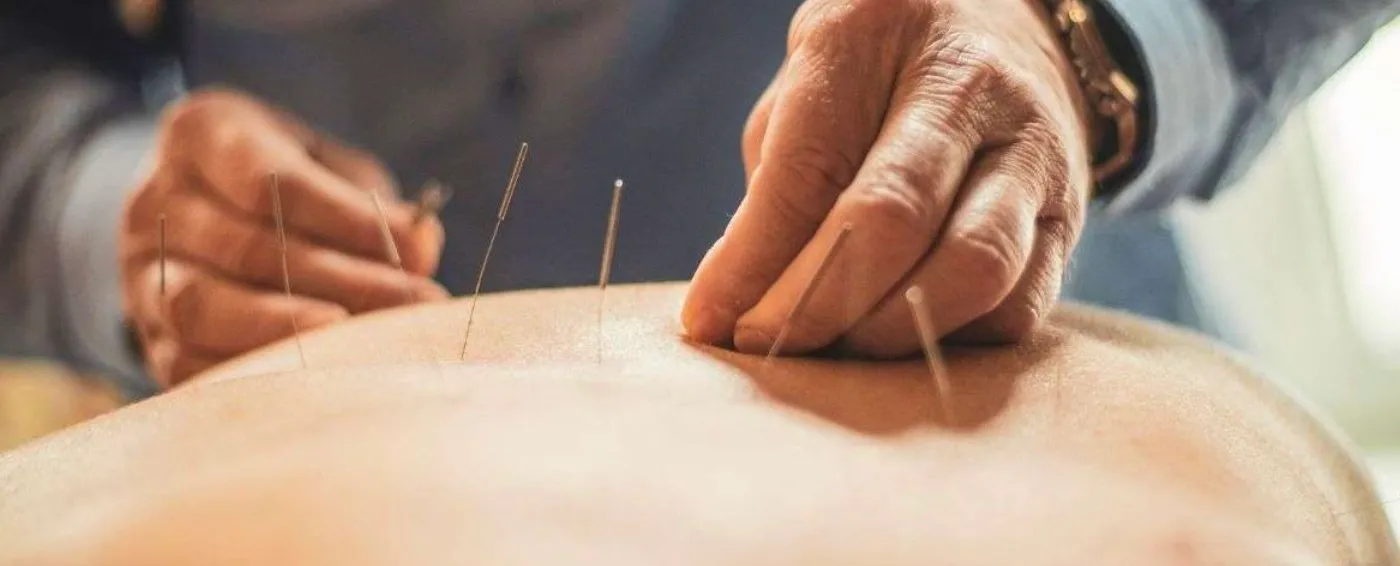
“Does acupuncture work?” The question sounds simple, calling for a yes or a no. It’s in fact one of the trickiest you can ask in medicine, and the way people answer it often reveals more about the speaker than about acupuncture itself. Let’s try to see clearly, with nothing to sell.
“Work,” but how?
First snag: what does “work” mean? Relieve a pain on the spot, or prevent it? Do better than a pill, than a fake needle, or than nothing at all? Researchers separate two questions we constantly conflate: efficacy in the strict sense (an effect greater than placebo, under the tightly controlled conditions of a trial) and effectiveness, what actually happens, in clinic, to a real person who sometimes leaves relieved. An approach can “work” in the second sense while remaining debated in the first. Much of the confusion lives there.
The placebo puzzle
Second snag, more dizzying: placebo. To judge a drug, you compare it to an inert pill. But what’s the “inert pill” of acupuncture? People have devised fake needles, pricks beside the points, retractable needles that never pierce the skin. Yet these sham treatments are never quite inert: there’s still an attentive practitioner, a touch, a ritual, half an hour of rest. As a result, in many trials, the “real” and the “fake” both do better than no care, and the gap narrows. Some read this as proof that acupuncture is “only” placebo. You can read it otherwise: placebo, here, is anything but inert, and a practice that mobilizes attention, touch and calm may reach something real, even if our instruments struggle to carve it out. That argument, the one about a zone we can’t pry open, carries on in The black box is everywhere.
Measuring the bespoke
Third snag: the measuring tool itself. The randomized trial was cut for the pill: one identical molecule, same dose, for everyone. Acupuncture does the opposite: it individualizes. Two people coming in for “the same” migraine may receive different points, because the tradition reads two different terrains. Standardizing the protocol to test it cleanly is a little like asking a tailor to sew a single size: you measure something, but no longer quite the real practice. This friction between the individual and the standard is no detail; it explains much of the mixed evidence.
So, an honest answer?
Here it is, no dodging. For some indications (chief among them certain chronic pains and certain forms of nausea), the scientific debate is lively and rather encouraging; for many others, the data remain thin, contradictory, or absent. The gap in question has an order of magnitude: for chronic pain, the individual patient data meta-analysis of 39 trials and 20,827 patients (Vickers et al., The Journal of Pain, 2018, PMID 29198932) places the advantage of real acupuncture at about 0.2 standard deviations against sham acupuncture, and about 0.5 against no treatment, with persistence at one year that decays by roughly 15%. Real, then, and modest. Acupuncture is neither the cure-all its zealots dream of nor the hoax its detractors denounce. It’s an old practice, reasonably safe in trained hands, whose interest is weighed indication by indication — and which always presents itself alongside usual care, never in its place. For the detail of the data, see our overview of the evidence; on the plausible mechanisms and their status, the review of the physiological processes of acupuncture.
In plain terms
This article is about the state of a debate, not a promise. Acupuncture is a complement to usual care; for any significant or persistent health problem, a medical assessment comes first.
In the Plateau-Mont-Royal, 7 days a week. Book online. In clinic: reasons for consulting.
In the Plateau-Mont-Royal, open 7 days a week. Acupuncturists · OAQ members, physiotherapist · OPPQ member. Insurance receipts issued on site.Our content follows a published editorial methodology.