Gérard de Nerval's "Voyage en Orient"
A literary reflection: Gérard de Nerval's "Voyage en Orient," between the real and reverie. An editorial note from MonAcupuncteur, Plateau-Mont-Royal.
Clinically reviewed by Justin Lapointe, member of the OAQ · August 8, 2026
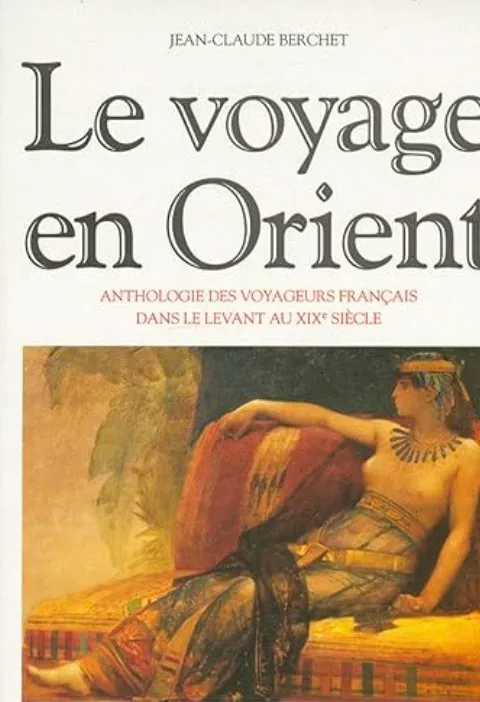
In December 1842, Gérard de Nerval set sail for the East. But he already carried the East in his luggage: the Thousand and One Nights read in childhood, the engravings, the reveries. The poet didn’t leave to discover a land — he left to verify a dream. That’s doubtless why his Voyage en Orient, published in 1851, is neither a guidebook nor a piece of reportage, but one of the most beautiful books ever written on the gap between what we seek and what we find.
We follow the traveller from Cairo to Constantinople, from spiced bazaars to nested tales (the story of the Queen of Sheba, the tale of the caliph Hakim) that Nerval borrows from books, rearranges and reinvents. The work takes liberties with the real, and makes no secret of it; scholars have since measured everything it owes to his reading rather than to his eyes. But it’s a fertile infidelity. “Dream is a second life,” Nerval would write on the threshold of Aurélia. For him, dreaming the East isn’t a failure of method: it’s the method.
The East as self-portrait
One hundred and twenty-seven years later, in 1978, Edward Said would place precisely this kind of narrative among the pieces of what he named Orientalism: that long Western habit of manufacturing a made-to-measure East (sensual, motionless, enigmatic) that often says more about the one looking than about what they claim to describe. Nerval, at least, is in good faith: he searches sincerely, and he knows he’s dreaming. The misunderstanding begins when the dream is taken for the thing itself.
An East of our own
Why this old book on an acupuncturist’s blog? Because Chinese medicine is also an East, and because we’re constantly at risk of dreaming it in Nerval’s manner. The West long oscillated between two equally deceptive mirages: the one that exoticizes it (a thousand-year-old, quasi-magical wisdom) and the one that dismisses it (a picturesque superstition). Both manufacture a bazaar East; both miss the real object: a demanding corpus, historically situated, run through with internal controversies, one that deserves to be read the way we read a difficult text, with neither devotion nor disdain.
Holding both ends at once is the whole art. Respecting what this tradition patiently observed, without lending it powers it doesn’t claim; practising it in Montreal, in the twenty-first century, without playing the tin-pot mandarin. The serious practitioner isn’t a tourist of the East: they’re someone who has travelled long enough to tell the map from the territory.
Nerval himself never quite managed to sort things out. He lost himself in his reveries, magnificently, then tragically: he took his own life one winter morning in 1855, on the rue de la Vieille-Lanterne. His Voyage nonetheless remains a precious companion, for it states a truth every caregiver should keep in mind: the gaze cast upon elsewhere is first of all a self-portrait. The trick is knowing it — and looking all the same.
In the Plateau-Mont-Royal, 7 days a week: first session 75 to 90 minutes, follow-up sessions 60 to 70 minutes, depending on the practitioner. Book online. Also worth reading: our reflections on acupuncture and medicine. On our approach: the clinic and its clinicians.
In the Plateau-Mont-Royal, open 7 days a week. Acupuncturists · OAQ members, physiotherapist · OPPQ member. Insurance receipts issued on site.Our content follows a published editorial methodology.