This article is part of our guide to Chinese medicine.
Traditional Chinese Medicine and the Menstrual Cycle: Understanding and Balancing
An inner "moon" of Yin and Yang: the four phases of the cycle and what the tradition observes. A framework, not a promise.
Clinically reviewed by Justin Lapointe, member of the OAQ · August 8, 2026
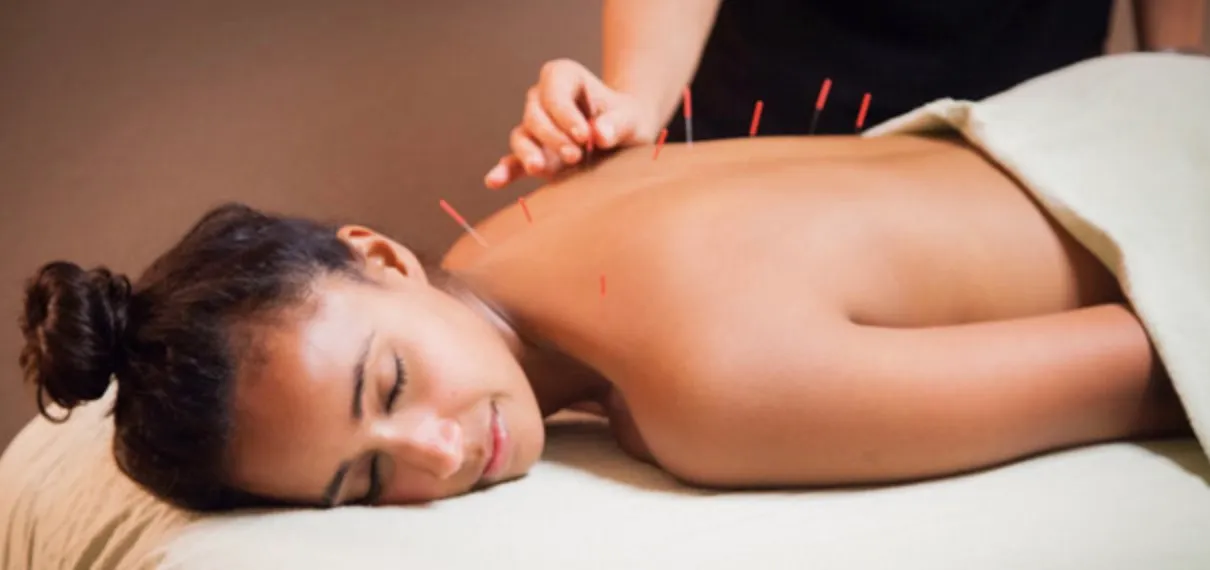
Long before calendars and tracking apps, the old medicines had noticed something: a woman’s body keeps a clock of its own, monthly, almost as regular as a moon. Chinese medicine drew from it a remarkably fine reading — not a machinery of hormones, which it did not know, but an inner tide of Yin and Yang that rises, crests, ebbs and withdraws, like the seasons over a year.
The four seasons of the cycle
For the tradition, the cycle is a small cycle of seasons. Each of its phases answers to a movement of Qi and Blood:
- Menstruation — the cycle’s autumn. The old Blood is released; what matters is that it flows without hindrance. Free circulation spares pain; stagnation invites it.
- After the period — spring. The body rebuilds its Blood and Yin, like sap rising again: a time to nourish and rest.
- Ovulation — summer. Yin, at its fullest, tips over into Yang; the high point of the inner year, and the most delicate.
- Premenstrual — the withdrawal. Qi gathers toward the uterus and prepares to descend; if it snags there, the tension and mood of PMS set in.
When the current is troubled
Cycle troubles, in this grammar, are less “illnesses” than disturbances of that flow. A painful period often signals a stagnation of Qi or Blood — something that isn’t circulating. Premenstrual syndrome, those storms of mood and tension, suggests a thwarted Liver Qi that “overflows” before the period. Absent periods are read as emptiness — not enough Blood, not enough energy to feed the cycle. Irregularity points, again, to the Liver, the great regulator of free flow. The tradition also ties the cycle closely to the Kidney, which keeps the essence, and to what it beautifully calls Tian Gui 天癸, the “celestial waters” — the influence that opens the cycle at puberty and withdraws around fifty.
Accompanying, phase by phase
From this reading follows a way of accompanying, more than correcting. Acupuncture here seeks to revive the free flow of Qi and Blood where it stalls; lifestyle adjusts to the cycle’s season — nourish and rest after the period, move gently (Qi Gong, Tai Chi) to keep things flowing, spare the Liver the stress that tightens it. None of this replaces gynaecological care, and nothing is promised: very painful, very heavy or very irregular periods deserve a medical opinion first. But seeing your cycle as a returning season — with its high points and its withdrawals — can already change how you move through it.
In plain terms
Qi, Blood, the “Liver” or Tian Gui are landmarks of Chinese thought — a cultural reading grid, distinct from physiology, and with no promise of results. This piece describes an approach, not a treatment; marked cycle troubles call first for a medical assessment.
In the Plateau-Mont-Royal, 7 days a week. Book online. Further reading: acupuncture and women’s health, and, when the cycle sits at the centre of a plan to conceive, our fertility page.
In the Plateau-Mont-Royal, open 7 days a week. Acupuncturists · OAQ members, physiotherapist · OPPQ member. Insurance receipts issued on site.Our content follows a published editorial methodology.