Acupuncture: The Ancient Art of Needles and Its Modern Benefits
Acupuncture put to the test: what the research really shows, the placebo question, what the needles do, and their safety — a clear-eyed look. Plateau-Mont-Royal.
Clinically reviewed by Justin Lapointe, member of the OAQ · August 8, 2026
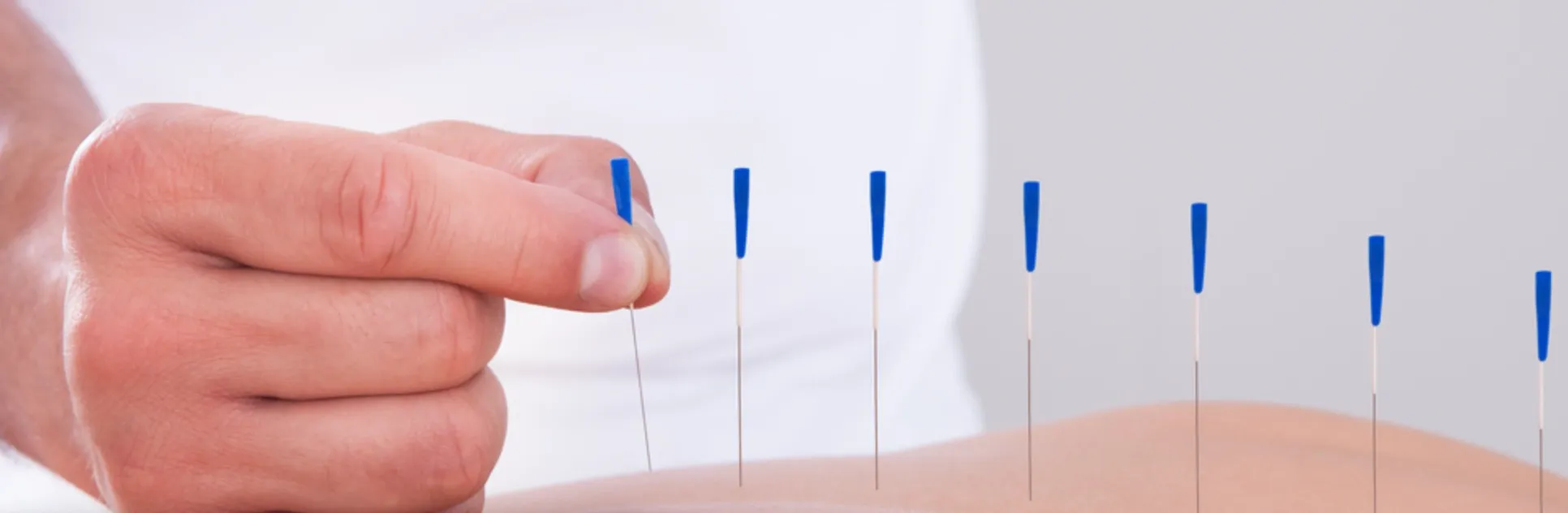
An acupuncture needle is measured in tenths of a millimetre across. Placing it well is an art two thousand years in the refining. But for some forty years now, that art has stood before a court it never saw coming: the randomized controlled trial. And the verdict is more nuanced, and therefore more interesting, than a flat “it works” or “it doesn’t.”
Book an appointment at the clinic (opens in a new tab)
The placebo on trial
To judge a drug, you compare it with an inert tablet: the placebo. For acupuncture, the “placebo” is called sham acupuncture: needling beside the points, or with needles that don’t penetrate. The aim is to separate the needle’s own effect from everything else: expectation, attention, the ritual of care.
The largest synthesis available, the Vickers et al. (2018), The Journal of Pain collaboration (20,827 patients with chronic pain across 39 trials), settles into nuance: acupuncture does better than no treatment, and a little better than sham. “More than a placebo,” then, but by a modest margin: about 0.2 standard deviations against sham acupuncture, about 0.5 against no treatment, with persistence at one year that decays by roughly 15%. The authors draw a disarmingly honest conclusion: a good share of the benefit comes from factors that have nothing to do with the precise point being needled.
Why the needle resists the double blind
You can hide from a patient whether they got the real tablet or the fake one. You can hardly hide from an acupuncturist whether they’re inserting a real needle. And “sham” acupuncture is not inert: touching, pressing, brushing the skin already produces effects. The comparison placebo is itself a little active. Acupuncture is a complex intervention (needle, the practitioner’s hands, attention, expectation, contact) that the mould of the drug trial, built for an isolated molecule, fits poorly. It’s not an excuse; it’s a fact of method.
Efficacy is not effectiveness
Two questions hide behind the word “works.” Efficacy asks: does the specific effect beat placebo under ideal laboratory conditions? Effectiveness asks: does the whole of the care help real patients in a real clinic? An intervention can show a modest efficacy signal against sham and yet a useful effectiveness. Because a patient never receives an “isolated specific effect”: they receive a consultation, the work of the hands, an expectation — and all of that together relieves them, or doesn’t.
What the needles do (and what we know)
In the language of TCM, the needle “rebalances Qi”: a traditional frame for reasoning, not a quantity you can measure. On the physiological side, research explores several serious leads: the release of endogenous opioids (endorphins), a neuromodulation of the nervous system, local effects on circulation and inflammation. Leads, not a full explanation: the exact mechanism of acupuncture remains an open question.
Safety
Here the picture is clearer. Performed by a qualified practitioner, with sterile single-use needles, acupuncture has a good safety profile: side effects (a light bruise, minor bleeding, passing tiredness) are rare and benign, and serious complications exceptional.
A few points, by way of example
- Taichong (LR3), on the foot, between the big toe and the second: in the tradition, called on for stress, headaches and the “Liver energy.”
- Hegu (LI4), on the hand, between thumb and index finger: a great point of the face and mouth in the tradition.
- Sanyinjiao (SP6), above the ankle, on the inner leg: linked by the tradition to digestion, the cycle and sleep.
- Baihui (GV20), at the crown of the head: the “meeting of a hundred,” called on to “clear the mind.”
An honest map
All told: for certain chronic pains (back, neck, knee osteoarthritis), for migraine and tension headache, for some nausea, the data are strongest. Elsewhere it’s promising or uncertain, and trial quality remains uneven. Acupuncture is best understood as a complement to usual care, with no promise of results — and that honesty is precisely what gives it authority. For the detail, indication by indication, see our overview of the evidence.
Ready to consult? Book online, in the Plateau-Mont-Royal, 7 days a week. In the clinic: the concerns people consult for.
In the Plateau-Mont-Royal, open 7 days a week. Acupuncturists · OAQ members, physiotherapist · OPPQ member. Insurance receipts issued on site.Our content follows a published editorial methodology.